What Helps Children Fall in Love With Reading

What Helps Children Fall in Love With Reading

Most parents don’t just want their children to be able to read.

They want reading to feel:

  • natural

  • meaningful

  • even joyful

But for many families, reading becomes tense long before it becomes pleasurable. Progress is measured. Skills are tracked. Comparison creeps in.

Somewhere along the way, the love of reading gets lost.

The good news?
Falling in love with reading is not mysterious — and it’s not accidental.


Reading Is an Emotional Experience First

Before reading is a skill, it’s a relationship.

Children decide how they feel about reading long before they master it. They notice:

  • whether reading feels safe

  • whether mistakes are allowed

  • whether effort is celebrated

  • whether they belong in the story

A child who feels capable and welcome will keep returning to reading — even when it’s hard.


Confidence Comes From Belonging

One of the most powerful (and underused) supports in early reading is personal relevance.

When children see:

  • their name

  • their family

  • their familiar world

…something important happens.

The cognitive load drops.
Confidence rises.
Engagement deepens.

This doesn’t replace good instruction.
It supports it — especially for children who are just beginning or who need reassurance.


Repetition Is How Mastery Is Built

Many children — and parents — internalize the idea that re-reading means you’re “stuck.”

In reality, re-reading is how:

  • fluency develops

  • confidence solidifies

  • meaning deepens

Children who fall in love with reading often do so by returning again and again to material that feels manageable and familiar.

There is no shame in that. There is power in it.


Joy Grows in Low-Pressure Spaces

Reading flourishes when:

  • expectations are clear but gentle

  • progress isn’t constantly evaluated

  • mistakes don’t carry emotional weight

This is why many children read more freely at home than at school — or more freely with one trusted adult than in a group.

Safety matters.


What Loving Reading Actually Looks Like

It often looks quieter than we expect.

A child who:

  • asks to read the same book again

  • sounds out words slowly

  • pauses to think

  • takes pride in small wins

This is real reading — and it’s worth protecting.


A Final Thought

Children don’t fall in love with reading because they’re pushed.

They fall in love with reading when they feel:

  • capable

  • seen

  • unhurried

Those conditions don’t just build readers.
They build thinkers.

And in a noisy world, that matters more than ever.


A Gentle Next Step

If you’re looking for a calm, confidence-building way to support early reading at home, you can start with our free parent guide.

👉 Download the free parent guide: How Children Learn to Read

You’re not behind.
You’re building something that lasts.

Warmly,
Bonnie

What’s Making Reading Harder — Even for Bright Kids

What’s Making Reading Harder — Even for Bright Kids

If your child is curious, articulate, and clearly bright — yet reading feels like a struggle — you’re not imagining things.

Many parents are quietly puzzled by this gap. Their child can explain complex ideas, ask thoughtful questions, and remember astonishing details… and yet becomes frustrated, avoidant, or overwhelmed when it comes to reading.

This isn’t a failure of intelligence.
And it isn’t a reflection of poor parenting.

Something else is going on.


The Environment Around Reading Has Changed

Children haven’t fundamentally changed.
Reading hasn’t fundamentally changed.

But the context in which children are learning has.

Today’s children are growing up in a world that:

  • moves quickly

  • fragments attention

  • rewards instant feedback

  • leaves little room for sustained focus

Reading, however, asks for something very different.

It asks a child to:

  • stay with one thing

  • tolerate uncertainty

  • move slowly through meaning

  • build understanding step by step

That mismatch matters — especially for bright kids who are used to things coming easily.


Attention Is the New Bottleneck

Reading is not just about knowing letters or sounds.
It requires sustained attention.

To decode a word, a child must:

  • hold sounds in mind

  • blend them deliberately

  • stay engaged even when it’s effortful

Many children today get very little practice staying with one task long enough for this kind of learning to settle.

This doesn’t mean screens are “bad,” or that parents are doing something wrong. It simply means that attention itself has become a fragile skill — and reading depends on it.

When attention is under strain, even capable children can struggle.


Speed and Pressure Short-Circuit Learning

Another shift parents often feel — even if they can’t name it — is pace.

Expectations are earlier.
Benchmarks come faster.
Progress is measured more publicly.

For some children, this pressure shows up as anxiety.
For others, as resistance or avoidance.

Bright children are often especially vulnerable here. When something doesn’t come easily right away, they may:

  • fear being “bad” at it

  • rush to guess instead of decode

  • disengage to protect their confidence

Ironically, pushing harder rarely helps. Learning to read is not accelerated by pressure — it’s supported by patience.


When Reading Becomes Performative

At some point, reading can stop being about understanding and start being about proving something.

Proving:

  • that you’re keeping up

  • that you’re smart

  • that you’re doing it “right”

When that happens, the emotional stakes rise. And once reading feels loaded with judgment, many children shut down.

Reading thrives in environments that feel:

  • safe

  • familiar

  • forgiving

Not evaluative.


What Actually Helps — Especially Now

Across homes, classrooms, and tutoring centers, the same principles keep resurfacing:

Short, focused reading moments
Ten calm minutes is often more effective than thirty pressured ones.

Familiar, confidence-building material
Re-reading is not regression — it’s how fluency grows.

Lower emotional stakes
Reading doesn’t need to perform. It needs to unfold.

Slowing down on purpose
Depth beats speed, especially in the early years.

When these conditions are present, even reluctant readers often soften. They approach reading instead of bracing against it.


A Reframe Worth Holding Onto

If reading feels harder right now, it’s not because your child isn’t capable.

It’s because reading asks for focus, patience, and persistence in a world that rarely practices those things.

With the right support, reading can still become a place of confidence — and even refuge.


A Simple Resource for Parents

If you’d like a calm, parent-friendly overview of how children learn to read — and what matters most along the way — you can download our free guide below.

👉 Download the free parent guide: How Children Learn to Read

You don’t need to rush.
You don’t need to fix everything.

You’re already paying attention — and that counts.

Warmly,
Bonnie

How Children Learn to Read (And Why So Many Parents Feel Confused)

How Children Learn to Read (And Why So Many Parents Feel Confused)

 If you’ve ever found yourself wondering whether you’re doing enough to help your child learn to read — or worrying that you might be doing the wrong thing — you’re not alone.

Today’s parents are surrounded by conflicting advice.
Some say “just read more books.”
Others emphasize sight words.
Still others talk about phonics, decoding, or the “science of reading,” often in ways that feel technical or intimidating.

The result? Many thoughtful, engaged parents feel unsure, overwhelmed, or quietly anxious.

Let’s take a breath and simplify this. Many parents search for answers about how children learn to read, especially when advice feels conflicting or overwhelming.

Why Reading Feels So Confusing Now

A generation ago, reading instruction looked more consistent. Today, parents are navigating:

  • mixed messages from schools and social media
  • well-intentioned advice that contradicts itself
  • pressure to start early, go faster, and “keep up”

Add to that the emotional weight of wanting your child to succeed — and it’s no wonder reading feels fraught.

The truth is not that parents are doing something wrong.
It’s that the system has been noisy.

How Children Actually Learn to Read (In Plain Language)

At its core, learning to read is a developmental process, not a performance.

Most children move through these building blocks:

  1. Hearing sounds (phonemic awareness)
    Before children read letters, they learn to hear and notice sounds in words — rhymes, beginning sounds, and small differences.
  2. Connecting sounds to letters (phonics)
    This is phonics: understanding that letters represent sounds.
  3. Blending sounds together into words (decoding)
    Slowly and deliberately, children learn to blend sounds into words. This step takes time and repetition.
  4. Automatic recognition (fluency)
    With enough practice, reading becomes smoother and more confident.

This progression is supported by decades of research. It’s not trendy. It’s not flashy. But it works.

Common Myths That Trip Parents Up

Let’s gently clear a few things out of the way.

Myth #1: If my child is smart, they’ll just pick it up.
Many bright children still need explicit, structured support to decode words.

Myth #2: Memorizing words means reading.
Memorization can look like reading — until new words appear. True reading relies on decoding.

Myth #3: If we push harder, progress will come faster.
Pressure often backfires, creating resistance instead of confidence.

Myth #4: Reading should look like school.
At home, reading support works best when it feels safe, familiar, and even playful.

What Actually Helps Children Thrive

Across homes, classrooms, and tutoring centers, the same principles show up again and again:

  • Consistency over intensity
    A little, often, beats a lot, occasionally.
  • Personal relevance
    Children engage more deeply when materials reflect their world.
  • Repetition without shame
    Re-reading is not failure — it’s how the brain wires itself.
  • Emotional safety
    Children learn best when they feel relaxed, seen, and capable.

When these elements are present, reading becomes something children approach, not avoid.

Where Personalization Fits In

One of the most powerful (and underused) supports in early reading is personalization.

When a child recognizes themselves — their name, their family, their familiar objects — the cognitive load drops. Confidence rises. Engagement deepens.

This doesn’t replace good instruction.
It supports it.

Personalized reading experiences can help bridge the gap between structured learning and real-world practice, especially for children just beginning their reading journey.

A Gentle Way Forward

If you’re unsure where to begin, start here:

  • Focus on sounds before speed
  • Allow repetition without rushing
  • Choose materials that feel warm and relevant
  • Trust that steady progress counts, even when it’s quiet

Most of all, remember: learning to read is not a race.

Your child doesn’t need perfection.
They need support, patience, and belief.

Ready for a Simple Next Step?

If you’d like a calm, confidence-building way to support early reading at home, we created We Can Books to reflect exactly how children learn — step by step, with structure, warmth, and personalization.

You can start small, move at your child’s pace, and build real reading foundations without pressure.

👉 Download our Free Parent Guide: How Children Learn to Read

You’re doing better than you think.

Warmly,
Bonnie


The Most Meaningful Gift You Can Give a Child This Season

The Most Meaningful Gift You Can Give a Child This Season

As the holidays approach, many of us are looking for gifts that actually mean something—something that lasts longer than a few hours of excitement. Most toys end up forgotten before the new year. But a personalized reading experience? That can change a child’s life.

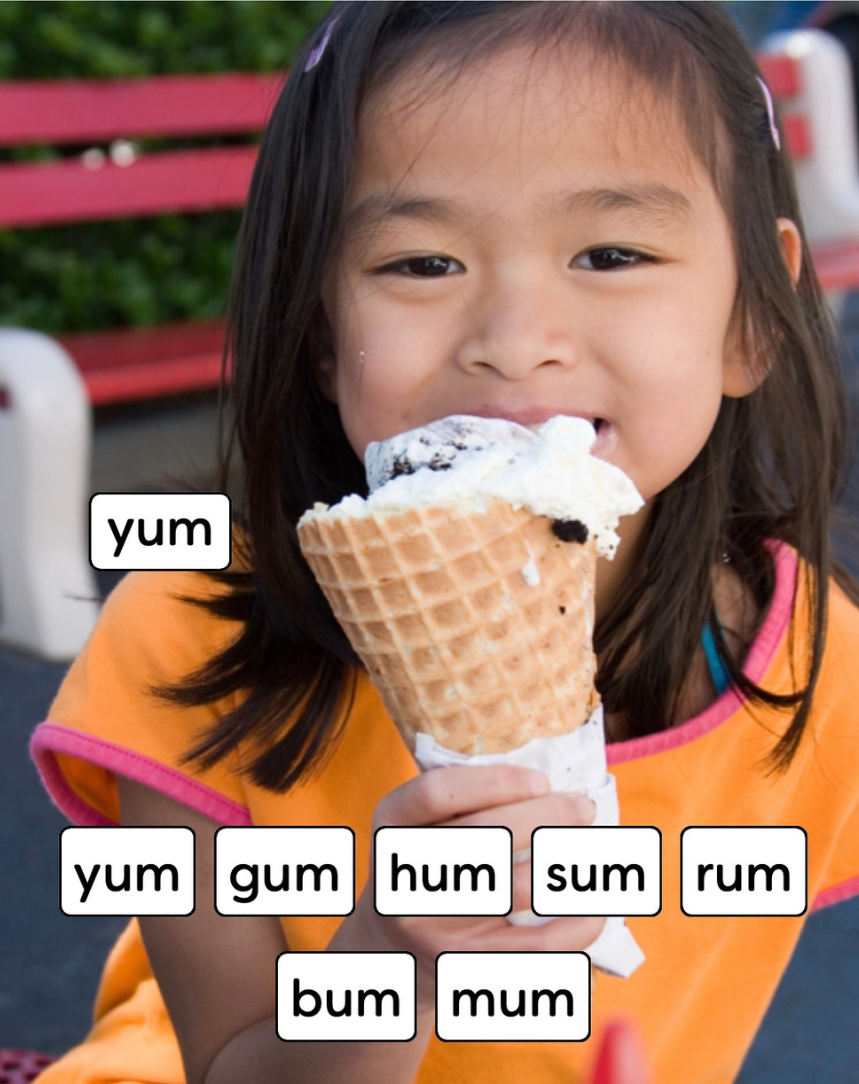
We Can Books isn’t just another children’s book. Each one is a custom phonics book built on the science of reading—the proven, step-by-step approach that helps children make the connection between letters, sounds, and meaning. By combining this with real photos from a child’s life, We Can Books turns learning to read into something joyful and deeply personal.

Children light up when they see their own world reflected on the page—their family, their pet, their favorite things. It captures their attention in a way no generic workbook or flashy toy ever could. And because each book uses rhyme and repetition to reinforce phonics patterns, it builds real reading skills with every page turned.

This season, consider a gift that’s both personal and purposeful. We Can Books offers gift certificates for a single volume or the full four-book set—perfect for birthdays, holidays, baby showers, or even classroom gifts. You can print or email them instantly—no shipping delays, no guesswork, no stress.

Give a gift that helps a child fall in love with reading—because few presents will ever matter more.

[Give the Gift of Reading – Buy a Gift Certificate]

When is Your Child Ready to Learn to Read?

When is Your Child Ready to Learn to Read?

Recognizing when your child is ready to start reading can be an exciting and important milestone. Keep in mind that children develop at different rates, so it’s essential to look for a combination of signs rather than expecting all of them to be present at once. Here are some common signs that your child may be ready to read:

  1. Interest in books: If your child shows a genuine interest in books and enjoys looking at them or being read to, it’s a positive sign. They may ask you to read the same book repeatedly or engage in pretend reading.
  2. Recognizing letters: When your child starts to recognize and name letters of the alphabet, it’s a good indication that they are making progress toward reading readiness.
  3. Phonemic awareness: Phonemic awareness is the ability to recognize and manipulate individual sounds in words. If your child can identify rhyming words, break words into syllables, or recognize the initial sounds of words, this is a crucial step toward reading.
  4. Print awareness: Children who are ready to read often show an understanding of how print works. They may point to words as you read them, follow the text from left to right, and understand that words have meaning.
  5. Storytelling: If your child can retell or create simple stories with a beginning, middle, and end, this demonstrates an understanding of narrative structure, which is important for comprehension skills.
  6. Fine motor skills: Good fine motor skills, such as the ability to hold a pencil or crayon and draw, can be an indicator of readiness for writing and, subsequently, reading.
  7. Curiosity and questions: A child’s curiosity about the world and their willingness to ask questions about how things work or what words mean shows a desire to learn and understand, which is fundamental for reading.
  8. Letter recognition and writing: When your child starts trying to write letters or their name, it’s a sign of growing interest in letters and words.
  9. Word and language play: If your child enjoys word games, such as rhyming or making up silly words, it’s a sign of a budding interest in language and reading.
  10. Memorization and repetition: Children often enjoy memorizing favorite books or songs, and they may start reciting them from memory.

Remember that reading readiness varies from child to child, and it’s important not to rush the process. Encourage their interest in books, engage in activities that promote language and literacy development, and provide a supportive and positive reading environment. If you have concerns about your child’s readiness to read, consider talking to a teacher or pediatrician for guidance and recommendations.

We Can Books is a great way to help teach your child to read when they are ready, as our combination of familiar images and rhyming phonics word sets is fun and engaging.