
Help Your Child Learn to Read at Home (Without the Struggle)

If you’re trying to help your child learn to read at home, and it’s not going the way you expected, you’re not alone.

Many children don’t naturally “pick it up.” And when reading feels hard, they begin to avoid it. What starts as a small struggle can quickly turn into frustration for both of you. And that’s why the right kind of reading experience makes all the difference.

The good news is that learning to read doesn’t have to feel this way. A few simple shifts can make a meaningful difference.


Why Some Children Struggle to Learn to Read

Reading is not a natural process. Unlike speaking, which children absorb through exposure, reading has to be taught and practiced.

For many children, the challenge comes down to decoding. They are trying to figure out how letters connect to sounds and how those sounds form words. If the text is too difficult or unpredictable, they start guessing instead of actually reading.

When that happens, confidence drops quickly. And once a child feels like they “can’t do it,” they often disengage.


What Actually Helps Children Learn to Read

Children make the most progress when reading feels doable.

That usually comes down to a few key elements:

When these pieces are in place, reading starts to feel less like a struggle and more like something they can figure out.


How to Support Reading Practice at Home

You don’t need to become a reading expert to help your child.

A few simple approaches can go a long way:

  • Keep sessions short. Even 5 to 10 minutes is enough
  • Encourage re-reading familiar books to build confidence
  • Avoid correcting every mistake. Focus on overall progress
  • Stay calm and supportive, even when it’s slow

Consistency matters more than intensity. Small, positive experiences with reading add up.

Here’s what that can look like in practice:
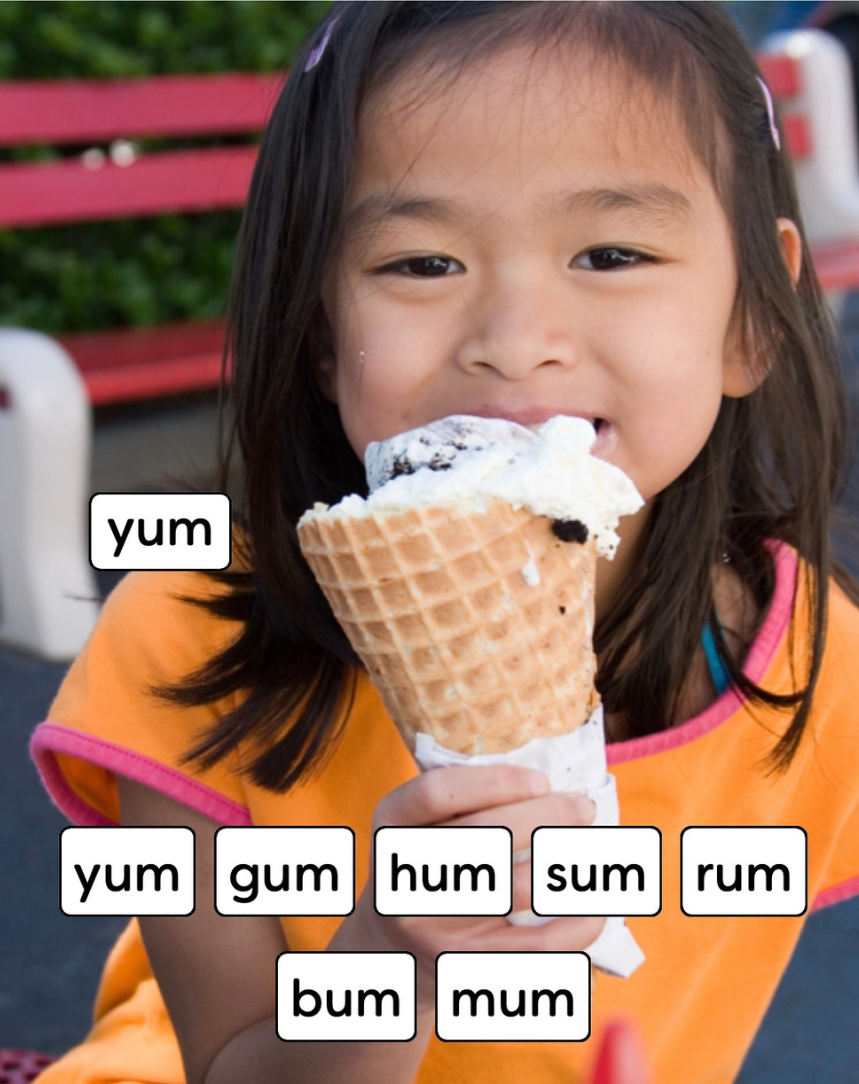

personalized phonics book using child photo to teach yum word family for early readers

Why Personalized Books Can Make Reading Click

One of the biggest challenges with early reading is engagement.

If a book feels unfamiliar or disconnected, children are less likely to stick with it. But when a book reflects their own world, something shifts.

That’s where personalized reading experiences can make a difference.

When children see their own photos, their own people, and their own everyday life in a book, reading feels more meaningful. They’re more willing to come back to it, and that repetition is what builds real skill.

At the same time, the text still needs to be structured in a way that supports decoding. When both pieces come together, engagement and learning reinforce each other.


A Simple Way to Get Started

If you’re curious what this could look like for your child, you can explore personalized phonics books that use your child’s own photos to make reading feel familiar and approachable.

You can learn more or create your first book here:
Download the We Can Books App
How Children Learn to Read (And Why So Many Parents Feel Confused)

How Children Learn to Read (And Why So Many Parents Feel Confused)

 If you’ve ever found yourself wondering whether you’re doing enough to help your child learn to read — or worrying that you might be doing the wrong thing — you’re not alone.

Today’s parents are surrounded by conflicting advice.
Some say “just read more books.”
Others emphasize sight words.
Still others talk about phonics, decoding, or the “science of reading,” often in ways that feel technical or intimidating.

The result? Many thoughtful, engaged parents feel unsure, overwhelmed, or quietly anxious.

Let’s take a breath and simplify this. Many parents search for answers about how children learn to read, especially when advice feels conflicting or overwhelming.

Why Reading Feels So Confusing Now

A generation ago, reading instruction looked more consistent. Today, parents are navigating:

  • mixed messages from schools and social media
  • well-intentioned advice that contradicts itself
  • pressure to start early, go faster, and “keep up”

Add to that the emotional weight of wanting your child to succeed — and it’s no wonder reading feels fraught.

The truth is not that parents are doing something wrong.
It’s that the system has been noisy.

How Children Actually Learn to Read (In Plain Language)

At its core, learning to read is a developmental process, not a performance.

Most children move through these building blocks:

  1. Hearing sounds (phonemic awareness)
    Before children read letters, they learn to hear and notice sounds in words — rhymes, beginning sounds, and small differences.
  2. Connecting sounds to letters (phonics)
    This is phonics: understanding that letters represent sounds.
  3. Blending sounds together into words (decoding)
    Slowly and deliberately, children learn to blend sounds into words. This step takes time and repetition.
  4. Automatic recognition (fluency)
    With enough practice, reading becomes smoother and more confident.

This progression is supported by decades of research. It’s not trendy. It’s not flashy. But it works. 

 If you would like a simple step by step way to support this at home, you can read more here: https://www.wecanbooks.com/how-to-help-your-child-learn-to-read-at-home-without-the-struggle/ 


Common Myths That Trip Parents Up

Let’s gently clear a few things out of the way.

Myth #1: If my child is smart, they’ll just pick it up.
Many bright children still need explicit, structured support to decode words.

Myth #2: Memorizing words means reading.
Memorization can look like reading — until new words appear. True reading relies on decoding.

Myth #3: If we push harder, progress will come faster.
Pressure often backfires, creating resistance instead of confidence.

Myth #4: Reading should look like school.
At home, reading support works best when it feels safe, familiar, and even playful.

What Actually Helps Children Thrive

Across homes, classrooms, and tutoring centers, the same principles show up again and again:

  • Consistency over intensity
    A little, often, beats a lot, occasionally.
  • Personal relevance
    Children engage more deeply when materials reflect their world.
  • Repetition without shame
    Re-reading is not failure — it’s how the brain wires itself.
  • Emotional safety
    Children learn best when they feel relaxed, seen, and capable.

When these elements are present, reading becomes something children approach, not avoid.

Where Personalization Fits In

One of the most powerful (and underused) supports in early reading is personalization.

When a child recognizes themselves — their name, their family, their familiar objects — the cognitive load drops. Confidence rises. Engagement deepens.

This doesn’t replace good instruction.
It supports it.

Personalized reading experiences can help bridge the gap between structured learning and real-world practice, especially for children just beginning their reading journey.

A Gentle Way Forward

If you’re unsure where to begin, start here:

  • Focus on sounds before speed
  • Allow repetition without rushing
  • Choose materials that feel warm and relevant
  • Trust that steady progress counts, even when it’s quiet

Most of all, remember: learning to read is not a race.

Your child doesn’t need perfection.
They need support, patience, and belief.

Ready for a Simple Next Step?

If you’d like a calm, confidence-building way to support early reading at home, we created We Can Books to reflect exactly how children learn — step by step, with structure, warmth, and personalization.

You can start small, move at your child’s pace, and build real reading foundations without pressure.

👉 Download our Free Parent Guide: How Children Learn to Read

You’re doing better than you think.

Warmly,
Bonnie