Help Your Child Learn to Read at Home (Without the Struggle)

If you’re trying to help your child learn to read at home, and it’s not going the way you expected, you’re not alone.

Many children don’t naturally “pick it up.” And when reading feels hard, they begin to avoid it. What starts as a small struggle can quickly turn into frustration for both of you. And that’s why the right kind of reading experience makes all the difference.

The good news is that learning to read doesn’t have to feel this way. A few simple shifts can make a meaningful difference.


Why Some Children Struggle to Learn to Read

Reading is not a natural process. Unlike speaking, which children absorb through exposure, reading has to be taught and practiced.

For many children, the challenge comes down to decoding. They are trying to figure out how letters connect to sounds and how those sounds form words. If the text is too difficult or unpredictable, they start guessing instead of actually reading.

When that happens, confidence drops quickly. And once a child feels like they “can’t do it,” they often disengage.


What Actually Helps Children Learn to Read

Children make the most progress when reading feels doable.

That usually comes down to a few key elements:

When these pieces are in place, reading starts to feel less like a struggle and more like something they can figure out.


How to Support Reading Practice at Home

You don’t need to become a reading expert to help your child.

A few simple approaches can go a long way:

  • Keep sessions short. Even 5 to 10 minutes is enough
  • Encourage re-reading familiar books to build confidence
  • Avoid correcting every mistake. Focus on overall progress
  • Stay calm and supportive, even when it’s slow

Consistency matters more than intensity. Small, positive experiences with reading add up.

Here’s what that can look like in practice:
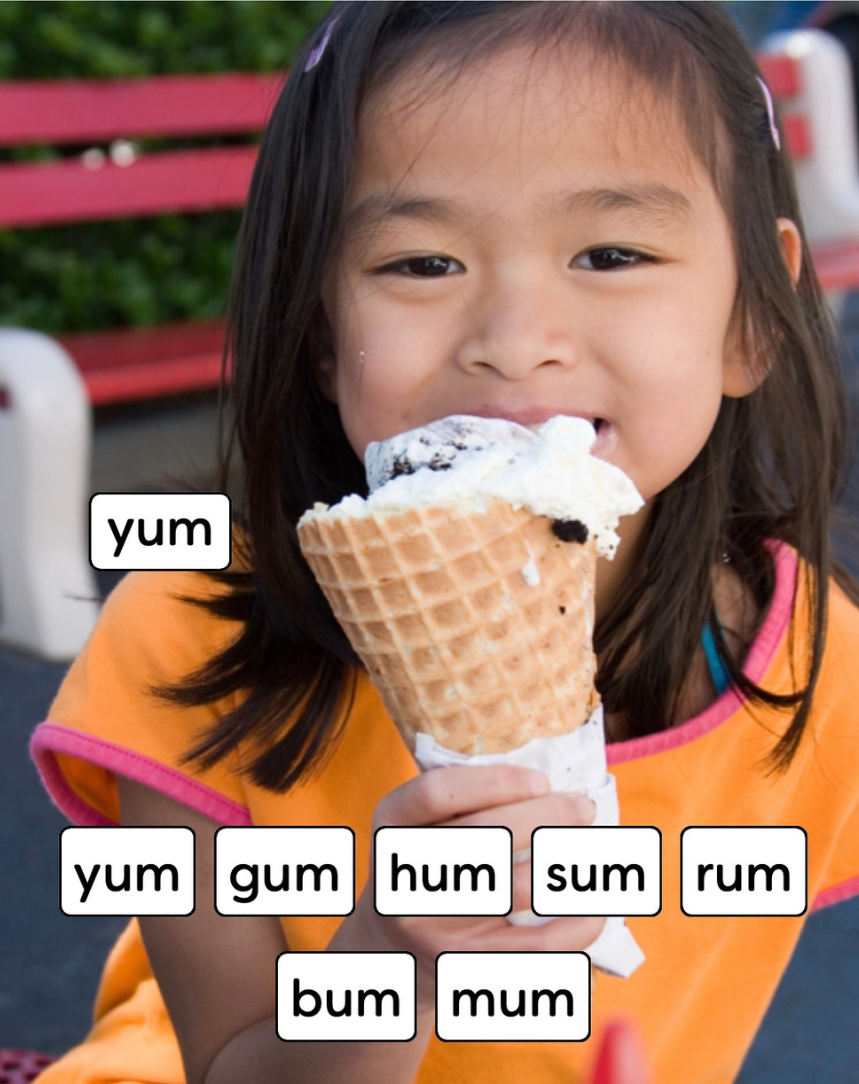

personalized phonics book using child photo to teach yum word family for early readers

Why Personalized Books Can Make Reading Click

One of the biggest challenges with early reading is engagement.

If a book feels unfamiliar or disconnected, children are less likely to stick with it. But when a book reflects their own world, something shifts.

That’s where personalized reading experiences can make a difference.

When children see their own photos, their own people, and their own everyday life in a book, reading feels more meaningful. They’re more willing to come back to it, and that repetition is what builds real skill.

At the same time, the text still needs to be structured in a way that supports decoding. When both pieces come together, engagement and learning reinforce each other.


A Simple Way to Get Started

If you’re curious what this could look like for your child, you can explore personalized phonics books that use your child’s own photos to make reading feel familiar and approachable.

You can learn more or create your first book here:
Download the We Can Books App

The Most Meaningful Gift You Can Give a Child This Season

The Most Meaningful Gift You Can Give a Child This Season

As the holidays approach, many of us are looking for gifts that actually mean something—something that lasts longer than a few hours of excitement. Most toys end up forgotten before the new year. But a personalized reading experience? That can change a child’s life.

We Can Books isn’t just another children’s book. Each one is a custom phonics book built on the science of reading—the proven, step-by-step approach that helps children make the connection between letters, sounds, and meaning. By combining this with real photos from a child’s life, We Can Books turns learning to read into something joyful and deeply personal.

Children light up when they see their own world reflected on the page—their family, their pet, their favorite things. It captures their attention in a way no generic workbook or flashy toy ever could. And because each book uses rhyme and repetition to reinforce phonics patterns, it builds real reading skills with every page turned.

This season, consider a gift that’s both personal and purposeful. We Can Books offers gift certificates for a single volume or the full four-book set—perfect for birthdays, holidays, baby showers, or even classroom gifts. You can print or email them instantly—no shipping delays, no guesswork, no stress.

Give a gift that helps a child fall in love with reading—because few presents will ever matter more.

[Give the Gift of Reading – Buy a Gift Certificate]

When is Your Child Ready to Learn to Read?

When is Your Child Ready to Learn to Read?

Recognizing when your child is ready to start reading can be an exciting and important milestone. Keep in mind that children develop at different rates, so it’s essential to look for a combination of signs rather than expecting all of them to be present at once. Here are some common signs that your child may be ready to read:

  1. Interest in books: If your child shows a genuine interest in books and enjoys looking at them or being read to, it’s a positive sign. They may ask you to read the same book repeatedly or engage in pretend reading.
  2. Recognizing letters: When your child starts to recognize and name letters of the alphabet, it’s a good indication that they are making progress toward reading readiness.
  3. Phonemic awareness: Phonemic awareness is the ability to recognize and manipulate individual sounds in words. If your child can identify rhyming words, break words into syllables, or recognize the initial sounds of words, this is a crucial step toward reading.
  4. Print awareness: Children who are ready to read often show an understanding of how print works. They may point to words as you read them, follow the text from left to right, and understand that words have meaning.
  5. Storytelling: If your child can retell or create simple stories with a beginning, middle, and end, this demonstrates an understanding of narrative structure, which is important for comprehension skills.
  6. Fine motor skills: Good fine motor skills, such as the ability to hold a pencil or crayon and draw, can be an indicator of readiness for writing and, subsequently, reading.
  7. Curiosity and questions: A child’s curiosity about the world and their willingness to ask questions about how things work or what words mean shows a desire to learn and understand, which is fundamental for reading.
  8. Letter recognition and writing: When your child starts trying to write letters or their name, it’s a sign of growing interest in letters and words.
  9. Word and language play: If your child enjoys word games, such as rhyming or making up silly words, it’s a sign of a budding interest in language and reading.
  10. Memorization and repetition: Children often enjoy memorizing favorite books or songs, and they may start reciting them from memory.

Remember that reading readiness varies from child to child, and it’s important not to rush the process. Encourage their interest in books, engage in activities that promote language and literacy development, and provide a supportive and positive reading environment. If you have concerns about your child’s readiness to read, consider talking to a teacher or pediatrician for guidance and recommendations.

We Can Books is a great way to help teach your child to read when they are ready, as our combination of familiar images and rhyming phonics word sets is fun and engaging.

The Gift of Reading: A Personal Reflection

If your child is struggling to learn to read—or just not interested—you’re not alone.

Many parents assume reading will “click.” But for a lot of kids, it doesn’t.

And when reading feels hard, they avoid it.

That’s where the right kind of early reading experience makes all the difference.

(This is exactly why I created We Can Books—personalized phonics books that use your child’s own photos to make reading feel familiar, meaningful, and worth coming back to.)

One of my earliest memories of joy is waiting for my dad to get home from work every evening so we could sit together, and he could teach me how to read.

I remember the excitement I felt, nestled in his lap in the big chair in our living room, as he showed me how letters and sounds came together to make words. It felt like a puzzle I could learn to put together. Small pieces joining to make bigger pieces that formed something real. And once I understood how the small pieces—the letters—worked, I could start to understand how to put them together. And I could READ WORDS.

My four-year-old brain felt like it was exploding with connections. Nothing was more fun. It seemed like we were cracking codes together. And every night I understood just a little more and was that much closer to being able to crack those codes on my own.

C – A – T

CAT

cat

If I could read that word on the page, I could read it anywhere. Anywhere! I could read it in other books, on signs, in the red letters of the marquee above the little theatre we drove past to come home. I could read it on cereal boxes and newspapers. I could read and recognize it and understand it all by myself.

The sense of freedom and excitement was dizzying. And the more I began to be able to make sense of the sounds of the letters and the words they could form, the more I wanted to read.

The world was opening to me. And I could feel it. 

I don’t remember how long it took for me to be able to master the basic sounds and combinations of letters that make the building blocks of reading. I just remember how fun it was, and that I looked forward to that time with my Dad every night.

I also remember thinking that reading was fun and easy, and when I started going to school, learning felt fun and easy too.

Learning to read early and well gave me a head start not just in school, but in life. It was possibly the greatest gift my parents could give me because it made so many important things possible.

The difference between kids who think reading is easy and fun, and who think it’s hard and boring—the kids who do well in school vs. the kids who struggle—is often the beginning of a difference that persists all their lives.

If you can read well, you have access to success in every other subject in school.

If you feel successful in school, you feel smart and competent. If you don’t, you are likely to feel like a failure. This simple but huge difference has a lasting impact on self-esteem. Self-esteem has a powerful effect on every action in life. 

There are more tragic outcomes for kids who have difficulty reading, but I’ll save that subject for another post.

Of course, I didn’t know any of this when I sat in my father’s lap after dinner and traced the letters with my little fingers, sounding out words and solving the puzzles using phonics. Starting with three letter words and moving to four letter words, putting together the building blocks of vowels and consonants, until I could make sense of just about any word I ran across, anywhere.

I learned to love reading, and to associate it with happiness and accomplishment. This love of reading has served me all my life. I feel so fortunate to have been given that incredible head start. Learning to read early and well was like being given the keys to life.

So what makes the difference?

It’s not just exposure to books.

It’s how reading is introduced.

Children need:

  • simple, decodable words they can actually figure out
  • repetition so they build confidence
  • and most importantly—something that feels connected to their world

This is where most early reading tools fall short.

We Can Books is here to spread that joy and to help give all children the keys to a happy, successful life. There may be no greater gift you can give a child than the gift of reading. And with it, you can create special moments and memories that last a lifetime. If you’re curious what this could look like for your child, you can create your first personalized book here.